
What do children and young people expect from parents and guardians in sports? Around 200 young people in Tromsø have contributed their experiences and advice. The result is seven inclusion rules of conduct, developed with the young people and communicated by the young people themselves.
Through our work with the Omnimodel for sports, we have wanted to highlight children and young people's own experiences with sports. The model will provide clubs and adults with knowledge and practical tools to create good and safe sports environments, with, among other things, belonging, community and culture as central themes.
This time we turned our attention to parents and guardians .
From young people's experiences to concrete advice
Throughout the fall, we have met with around 200 young people from various sports communities in Tromsø. We have asked what parents and guardians do that contributes to well-being and belonging, what adults can do that is perceived as difficult, and what the young people themselves think is needed to create a more inclusive sport.
The message is clear: Young people want parents who care, stand up for themselves and get involved. But they also challenge adults to look beyond their own children and see the whole community .
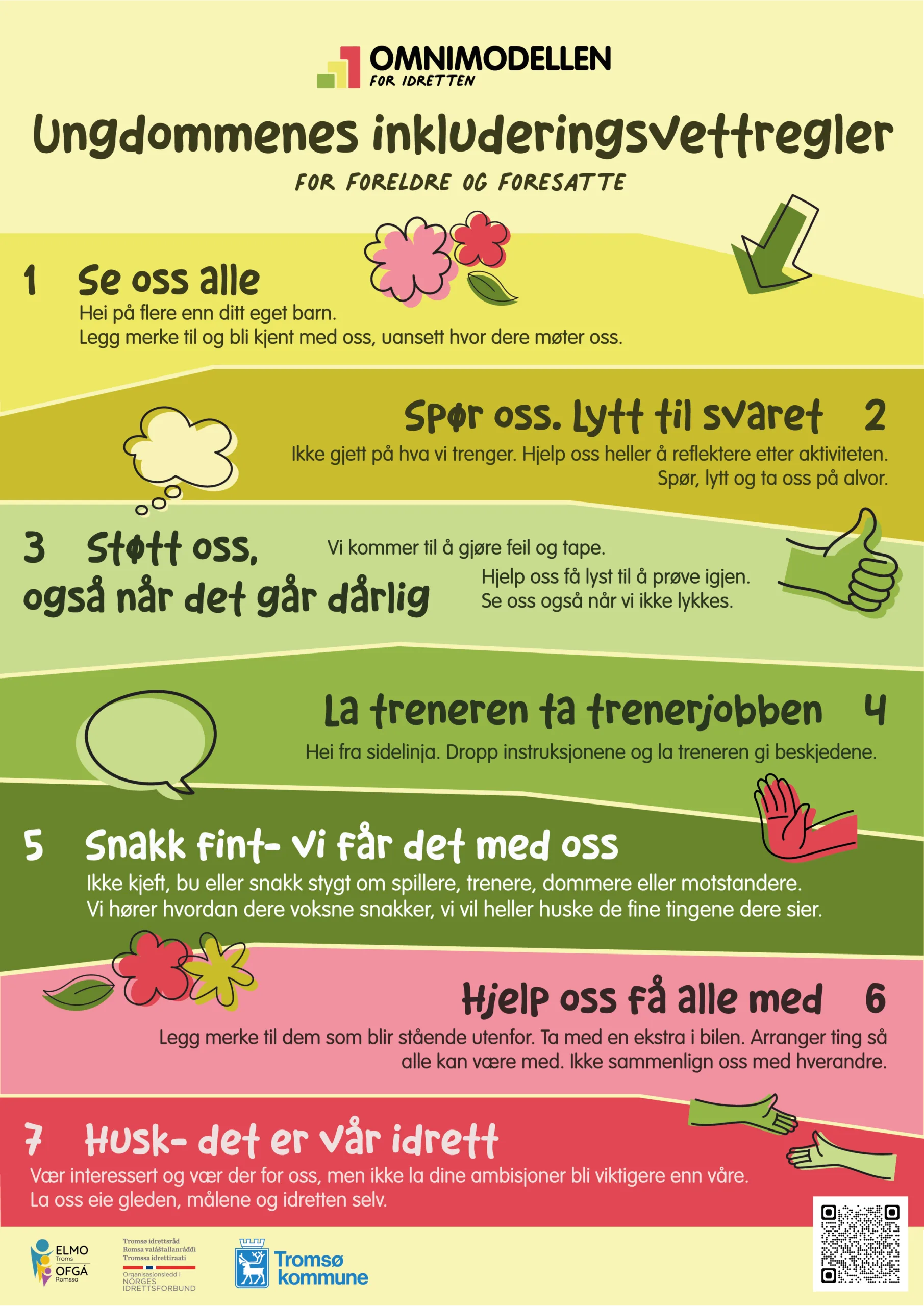
The inputs are collected in the Youth Inclusion Code of Conduct for Parents and Guardians :
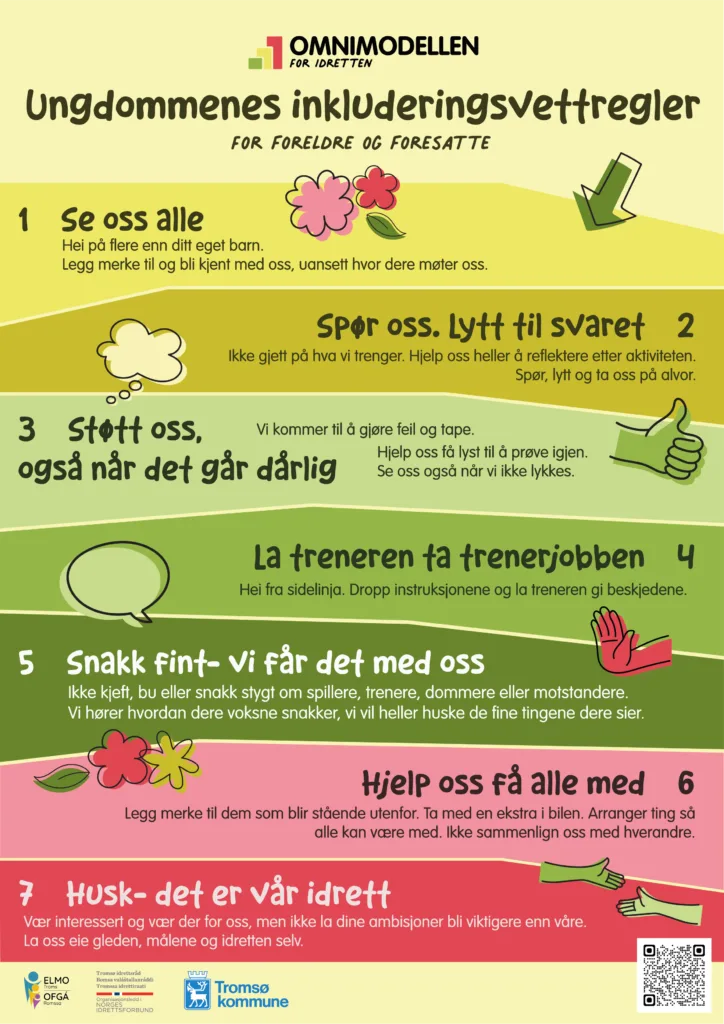
The advice is simple, but points to something fundamental: Parents are not only supporters of their own child. Adults also help create the culture and community around all children and young people in sports.
The young people themselves spoke out
When the rules were to be presented at the Sports and Inclusion Conference in Tromsø , it was therefore natural that the young people themselves were given a central role. The conference was aimed at coaches, managers, guardians and other interested parties, and asked precisely the question of what happens when the consideration for one's own child becomes stronger than the consideration for the community.
The young people themselves presented the inclusion etiquette rules and the message behind them to the adults in the room.
That's an important point in itself. If we are to develop sports environments that are good for children and young people, it's not enough to just talk about them. We need to create spaces where we can listen to them and take their experiences seriously .
From youth participation to action
The inclusion code of conduct fits well with the thinking in the Omnimodel for sports. The goal is not only to convey good values, but to make the values visible in the culture and in the concrete actions surrounding children and young people. One of the themes in the model is precisely about turning good values and visions into practical actions in everyday club life.
The youth rules do exactly this.
Watch us. Listen to us. Support us. Help us get everyone involved. And remember that sport is first and foremost ours.
It gives coaches, managers and parents a good question to take back to their own club:
What can we adults do to help more children and young people know: I belong here?
Here you can download the Inclusion Code of Conduct, and you can freely share these on social media and/or print and distribute them to teams, associations, parents and anyone who has or works with children and youth.
Read more and find resources on the Omnimodel for sports . Here are ten themes with films and articles that can be used for reflection and development work in clubs and sports teams.